
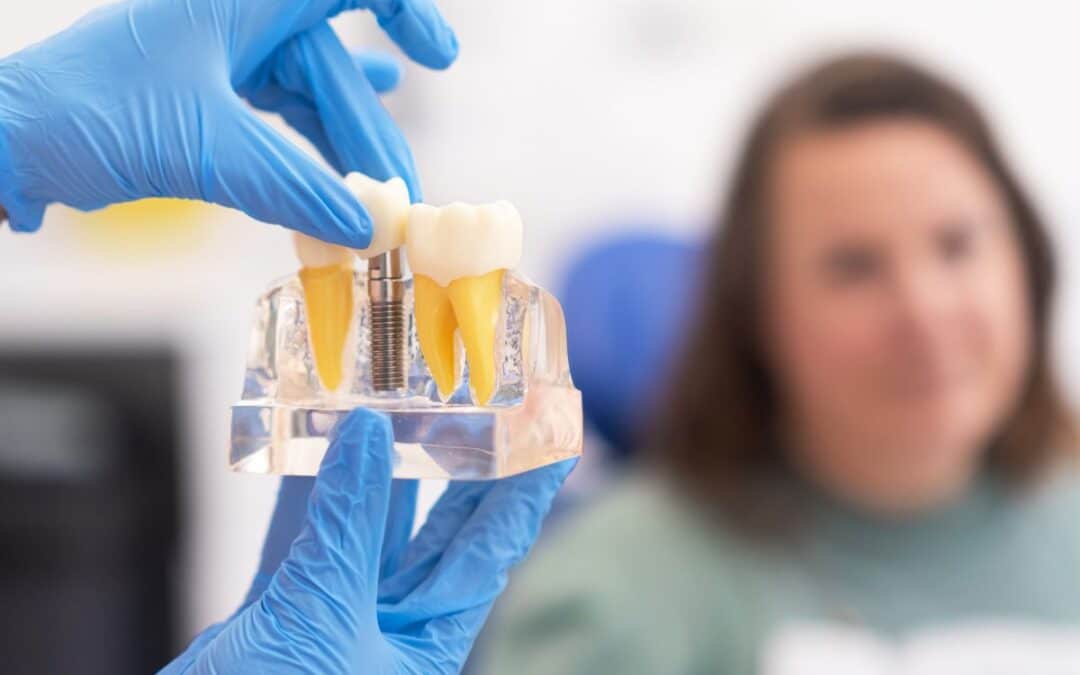
When a tooth is lost, the jawbone under it slowly shrinks because the root no longer sends chewing force into the bone. Less bone can make an implant harder to place, but a graft or a changed plan often solves the problem. An exam with X-rays shows where your bone stands.
You lost a tooth. Maybe it was last month, maybe years ago. It may not hurt, and you may have learned to chew on the other side. Here is what many people never hear: that gap is more than a hole in your smile.
Under the gum, the bone that once held the tooth starts to shrink. Many people start searching online for dental implants treatment, offered by asking about cost, but the first question should be about bone. The answer shapes your plan, your wait time, and your results.
This guide covers what bone loss is, how it changes implant care, and what you can do about it. You will also find a quick self-check, two comparison charts, and answers to common questions.
Why the Jawbone Shrinks After a Tooth Is Lost
Bone is living tissue. It stays strong when it gets used. A tooth root passes chewing force into the jaw, and that force tells your body to keep the bone in place. Once the tooth is gone, the signal stops, and the body slowly takes minerals back from the area.
The change starts fast. Dental research shows the jaw can lose about a quarter of its width within the first year after a tooth is pulled, and the loss goes on for years. The American Academy of Periodontology also explains that bone shrinks when teeth go missing and that implants can help hold it in place.
What Can Speed Up Bone Loss
- Gum disease: Infection eats away the bone around teeth, often before a tooth falls out.
- Dentures: They rest on the gums and do not send force into the bone, so the ridge keeps shrinking and the fit gets loose.
- Long waits: Each year without a replacement means less bone to work with.
- Smoking and uncontrolled diabetes: Both slow healing and weaken bone health.
A Quick Self-Check: Is Bone Loss Starting?
Tick each one that sounds like you:
- A tooth was pulled more than a year ago and never replaced
- Your denture slips, clicks, or needs more adhesive than before
- Your cheek or lip looks more sunken near the gap
- Nearby teeth lean into the empty space
- You chew mostly on one side
- The gums near the gap are red or bleed
Ticked two or more? Ask for an X-ray. Bone loss rarely hurts, so pain is not a good guide. Only imaging shows the real picture.
How Bone Loss Changes Implant Treatment
An implant is a small post that acts as a tooth root. At Legacy Dental Group, our treatment follows three phases: the dentist places the post in the jawbone, the area heals while the post fuses with the bone (called osseointegration), and then a custom tooth is attached. The post needs solid bone on all sides to stay firm.
Bone loss can change the plan in four ways:
- Height: A short ridge may not hold a post of the right length. In the upper back jaw, the sinus can sit close to the bone.
- Width: A thin ridge may not wrap around the post.
- Time: A graft adds healing months before the implant.
- Visits and cost: More steps mean more appointments and a different fee.
Less bone does not always mean no implant. It means the plan needs more care, and your dentist should explain every added step before it starts.
Chart 1: What Your Bone Level May Mean
| Bone Level | What X-Rays May Show | Likely Next Step | Rough Timeline |
| Healthy | Enough height and width | Implant placement after the exam | Healing often takes 3 to 6 months before the new tooth |
| Mild loss | Slightly thin ridge | Small graft during placement, or a short wait | A little added healing time |
| Moderate loss | Ridge too thin or short | Bone graft first, implant later | Graft healing often takes 3 to 6 months |
| Severe loss | Very little bone | Detailed review of all options, possibly a specialist | Set after the exam |
These are general ranges. Your X-rays and health history decide the real plan.
Chart 2: Tooth Replacement Choices and Your Jawbone
| Option | Helps Keep Jawbone? | Upkeep | Good to Know |
| Implant | Yes, the post sits in bone and passes chewing force into it | Brushing, flossing, regular checkups | Needs enough bone |
| Fixed bridge | No, bone under the gap keeps shrinking | Special floss; neighboring teeth are shaped | Done faster |
| Removable denture | No, and it can speed bone loss | Relines and adjustments over time | Lower starting fee |
| No replacement | No | Teeth may shift | Bone loss continues |
What Happens When Bone Is Low
Two common fixes rebuild what was lost:
- Bone graft: Graft material is placed in the thin area, and over months your body grows its own bone around it.
- Sinus lift: For upper back teeth, the sinus floor is raised to make room for new bone.
Sometimes a shorter or narrower post is safe to use instead. Your dentist will tell you which of these can be done in the Canton office and which may need a specialist. That talk should happen before treatment begins.
Why Timing Matters
Waiting a few months for a tooth to heal is normal. Waiting for years is where cases get harder. If a tooth came out recently and you are looking up a dentist near me, ask for imaging at the first visit. Early checks keep more choices open and can turn a graft case into a simple one.
Planning Treatment in Canton, TX?
Patients travel to our office on TX-243 from Edgewood, Grand Saline, Wills Point, Van, and across Van Zandt County, so scheduling matters. We are open Monday to Thursday, 8:00 a.m. to 5:00 p.m., and Friday, 7:00 a.m. to 3:00 p.m. During busy First Monday Trade Days weekends, traffic around town slows, so a weekday morning is easier.
Choosing where to go takes more than a quick search. Typing “dentist near me” into your phone is a fair start, but distance should not be the only filter. Ask each office how it checks bone before surgery, what happens if a graft is needed, and who handles follow-up care. A good answer is clear and comes with a written plan.
Cost questions are fair, too. When you compare dental implants canton clinics provide, ask for a written estimate that lists the exam, imaging, any graft, the post, and the new tooth. Legacy Dental Group accepts many plans, including Aetna, Cigna, Delta Dental, MetLife, and Guardian, and coverage for implants varies by plan. Our treatment and financial coordinator and insurance team can check your benefits and go over payment choices before you decide.
Know Our Dentists
Five dentists care for patients at Legacy Dental Group. Here is a short look at their training, so you know who may plan your care.
Dr. Glenn Stern: Raised in Kerrville, Texas, he graduated from Texas A&M University and Baylor College of Dentistry in Dallas. He holds Master status in the Academy of General Dentistry and is a Fellow in the Academy of Dentistry International. He also serves on the board of the Canton Educational Foundation.
Dr. Ben Bratcher: A Richardson native, he graduated with honors from the University of Arkansas and made the Dean’s Honor List at Baylor College of Dentistry. He is a Master in the Academy of General Dentistry, an Air Force veteran, and served as president of the Texas Academy of General Dentistry in 2021. The Canton Chamber of Commerce named him Man of the Year in 2001.
Dr. Bret Downing: He earned his dental degree at The University of Texas Health Science Center in San Antonio. He then spent 28 years in the Public Health Service, caring for underserved communities, veterans, and areas recovering from natural disasters.
Dr. Rami Hritani: He holds a Bachelor of Dental Surgery from Riyadh Elm University and a Doctor of Dental Surgery from the University of Minnesota School of Dentistry. He enjoys teaching patients about oral hygiene and treats all ages.
Dr. James Tran: A Grand Prairie native, he earned a biology degree at UT Dallas and his dental degree with honors from Texas A&M College of Dentistry. He is a member of the American Dental Association and the Texas Dental Association, and he believes every patient should feel heard.
This mix of training and local ties matters when a plan depends on careful exams and clear talk.
Frequently Asked Questions
- How fast does the jawbone shrink after a tooth is removed?
Most of the change happens in the first year, with about a quarter of the width lost. It keeps going slowly after that.
- Can I still get an implant if I already have bone loss?
Often yes. A graft or sinus lift may be added first, and your exam decides what fits.
- Does a bone graft hurt?
Most people feel soreness and swelling for a few days. Your dentist will explain pain control and aftercare ahead of time.
- How long does a graft take to heal?
Often 3 to 6 months, depending on the size of the graft and your health.
- Do dentures cause bone loss?
Dentures do not stop bone loss. Because they press on the gums instead of the bone, the ridge can shrink faster over time.
- Can bone grow back on its own?
Not fully. Small defects may fill in, but a lost ridge usually needs a graft to rebuild.
- How will I know how much bone I have?
X-rays and other imaging show bone height and width. Your dentist reviews them with you.
- Does insurance cover bone grafts or implants?
It depends on your plan. Many plans cover only certain steps, so ask for a benefits check before treatment.
Final Thoughts: Protect Your Bone, Protect Your Options
Bone loss starts quietly and keeps going while a tooth stays missing. The good news is that most cases have a path forward when the problem is found early. A short exam and X-rays are the best first step toward dental implants canton, TX has to offer, and they show where your bone stands today. Searching for a dentist near me is easy, but picking one who explains each step is what protects your decision. Ready to find out where you stand?
Schedule an appointment with Legacy Dental Group and we will check your bone, answer your questions, and lay out your options in plain words.